Elevated Macaroni and Cheese with Smoked Gouda, Calabrian Chili, and Brown Butter Breadcrumbs
Chef James Thomas · Recipe Feature
Elevated Macaroni and Cheese with Smoked Gouda, Calabrian Chili, and Brown Butter Breadcrumbs
The dish you thought you knew, rebuilt from the roux up with smoke, heat, and something approaching conviction.
Yield
6 substantial servings
Active Time
45 minutes
Total Time
1 hour 20 minutes
Difficulty
Deceptively moderate
Season
All year
Macaroni and cheese has a reputation problem — not because the dish is flawed in its concept, but because decades of powdered shortcuts and apologetic home cooking have buried its actual potential under an orange sediment of mediocrity. The version most people grew up eating was not comfort food. It was culinary resignation dressed in a casserole dish.
This recipe does not rehabilitate that memory so much as replace it entirely. We are working with a properly constructed béchamel — not a shortcut, not a slurry — layered with the deep, campfire-adjacent warmth of smoked Gouda, the low, insistent heat of Calabrian chili paste, and a brown butter breadcrumb crust that shatters at the touch of a spoon and smells like something you would genuinely regret missing. The smoke is structural here, not decorative.
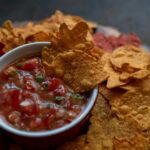
Photo by Anh Nguyen from Pexels – this image is decorative and may not represent the deliciousness under investigation in this post.
What follows is elevated macaroni and cheese in the truest sense: a dish that earns the word ‘elevated’ by doing the unglamorous foundational work correctly before adding anything interesting. Build the base properly, and the flourishes take care of themselves. Skip steps at your own risk.
Smoked Gouda without a proper béchamel beneath it is just expensive cheese on sad pasta. The sauce is the argument. Everything else is punctuation.
— James Thomas, on cheese sauce architecture
Ingredients
The Pasta
450 g dry cavatappi (Barilla or De Cecco — the ridges and coils trap sauce in ways elbow macaroni simply cannot aspire to)
1 tbsp fine sea salt, for pasta water
The Béchamel Base
60 g unsalted butter (European-style, minimum 82% fat — Kerrygold or Plugrá)
60 g all-purpose flour, unbleached
900 ml whole milk, warmed (not hot — approximately 60°C)
1 tsp fine sea salt
1/2 tsp freshly ground white pepper
1/4 tsp freshly grated nutmeg
1 tsp dry mustard powder (Colman’s — this is non-negotiable)
The Cheese Pull
200 g smoked Gouda, coarsely grated (Beemster or Old Amsterdam smoked — avoid the pre-sliced supermarket rounds)
150 g sharp white cheddar, coarsely grated (Cabot Seriously Sharp or Montgomery’s)
80 g Gruyère, finely grated (Emmi Le Gruyère AOP — adds depth without drawing attention to itself)
50 g cream cheese, full-fat, room temperature (Philadelphia original)
The Heat Layer
2 tbsp Calabrian chili paste (Tutto Calabria — jarred whole chilies, blended smooth, are a reasonable substitute)
3 cloves garlic, microplaned to a paste
1 tsp smoked paprika (Pimentón de la Vera, Picante — not sweet)
The Brown Butter Crust
80 g unsalted butter (same quality as above)
120 g panko breadcrumbs (Ian’s or Kikkoman — not standard dry breadcrumbs, which produce a mealy, regrettable crust)
30 g Parmigiano-Reggiano, finely grated (24-month minimum aging)
1/2 tsp smoked paprika
1/4 tsp fine sea salt
Method
01Cook the Pasta Aggressively Underdone
Bring a large pot of water to a rolling boil and salt it until it tastes meaningfully of the sea — undersalted pasta water is a foundational error that no amount of sauce will correct. Cook the cavatappi for precisely 2 minutes less than the package’s suggested al dente time. You are looking for pasta that is chalky at the very center when bitten — it will finish cooking in the oven, and if you start with fully cooked pasta you will finish with something that has given up entirely. Drain without rinsing (rinsing removes starch; starch helps the sauce adhere), toss immediately with a thin film of olive oil to prevent clumping, and set aside. The pasta should still be steaming when you move to the next step.
02Build the Béchamel Without Apology
Melt the butter in a wide, heavy-bottomed saucepan over medium heat — a 3-quart stainless or enameled cast iron is ideal. When the foam subsides and the butter smells faintly nutty (not brown, not burned — the line between the two passes faster than you expect), add the flour all at once and stir vigorously with a wooden spoon or flat whisk. Cook this roux for a full 2 minutes, stirring constantly. It should smell like toasted shortbread and turn a pale gold. This step cooks out the raw flour taste, and skipping it produces a sauce that tastes like wallpaper paste with ambitions. Add the warmed milk in a slow, steady stream, whisking without interruption. The moment you stop whisking before the milk is fully incorporated is the moment lumps form. Bring the sauce to a gentle simmer over medium heat, whisking frequently, and cook for 8 to 10 minutes until it coats the back of a spoon thickly and a line drawn through it holds cleanly. Season with salt, white pepper, nutmeg, and the dry mustard powder. The mustard is invisible in the final dish and irreplaceable — it sharpens the cheese without announcing itself.
03Introduce the Smoke and Heat
Remove the béchamel from direct heat — adding cheese to a sauce that is actively boiling causes the proteins to seize and the fat to separate, producing a greasy, grainy result that no amount of wishful stirring will rescue. Stir in the cream cheese first, whisking until completely smooth; it acts as an emulsifier and insures against breaking under the weight of the melting cheeses that follow. Add the smoked Gouda, cheddar, and Gruyère in three additions, whisking each in fully before adding the next. The sauce should become glossy, deeply golden, and smell of smoke and warm dairy in a way that makes standing over the stove feel earned. Once all cheese is incorporated, stir in the Calabrian chili paste, microplaned garlic, and smoked paprika. Taste the sauce now — it should be smoky, gently spicy with a low burn that builds toward the back of the palate, and rich without being cloying. Adjust salt at this stage only.
04Brown the Butter for the Crust
In a separate small skillet, melt the 80g of butter over medium heat. (Brown butter does not wait.) Watch it closely: it will foam, subside, foam again, and then — within approximately 3 to 4 minutes — begin to turn a deep amber and smell intensely of toasted hazelnuts and caramel. The moment you see the milk solids at the bottom of the pan turn the color of weak tea, pull it from the heat immediately and pour it over the panko in a bowl. The residual heat of the pan will continue cooking the butter, so timing here is slightly aggressive on purpose. Toss the panko with the brown butter, Parmigiano-Reggiano, smoked paprika, and salt until every crumb is coated and the mixture smells obscenely good. It should clump slightly when pressed and fall apart when released — this texture is what produces a crust with genuine structural integrity rather than a dusty afterthought.
05Assemble, Crust, and Bake With Intent
Preheat your oven to 190°C (375°F). Combine the drained cavatappi with the cheese sauce in a large bowl, folding gently until every piece of pasta is thoroughly coated — the sauce should be abundant rather than adequate. Transfer to a buttered 9×13-inch baking dish (ceramic or enameled cast iron retain heat more evenly than glass and will give you a better set). Distribute the brown butter breadcrumb mixture evenly over the surface, pressing it lightly into a continuous layer with the flat of your palm. Bake uncovered on the center rack for 28 to 32 minutes, until the crust is a deep, uniform amber — not pale gold, not patchy brown, but the even color of a well-tanned leather shoe — and the sauce is visibly bubbling at the edges of the dish. Allow the baked macaroni to rest for 10 minutes before serving. Cutting into it immediately produces a molten slide that looks enthusiastic but tastes like nothing that has had time to resolve. The rest period is not optional.
06Finish and Serve With Precision
Serve directly from the baking dish in generous, scooped portions that capture both the crust and the sauced interior in each serving. A scatter of thinly sliced fresh scallion greens adds a clean, sharp contrast to the richness — not garnish in the decorative sense, but a functional counterweight. A few drops of good hot sauce at the table — Tabasco Chipotle or Cholula Chili Garlic — allow individual calibration of heat without altering the dish’s structure. This elevated macaroni and cheese is self-sufficient on the plate and requires nothing else to be complete, though it will tolerate a simple green salad dressed with sharp vinaigrette as a companion without complaint.
Variations
The Truffle Correction
Replace smoked Gouda with 200g Fontina Val d’Aosta. Omit Calabrian chili paste entirely. Add 1.5 tbsp truffle oil (white, drizzled into the finished sauce off heat — not cooked) and 15g finely shaved black truffle over the crust before baking.
This version trades heat and smoke for something darker and more expensive in every sense. The Fontina melts with an almost sinful creaminess and defers to the truffle without competition. It is for occasions where you need the dish to make a statement without raising its voice.
The Bacon Fortification
Render 180g thick-cut smoked bacon (Nueske’s applewood-smoked, cut into 1cm lardons) in a skillet until deeply caramelized and crisp. Fold half into the pasta-sauce mixture before baking; press the remainder into the top layer beneath the breadcrumbs. Increase smoked paprika in the sauce to 1.5 tsp.
The rendered bacon fat carries the paprika smoke further than the original recipe and adds a textural contrast — yielding in the interior, crisp at the surface — that makes this version more insistently satisfying. It is unambiguous in its intentions and the correct choice for cold weather and people who eat without irony.
The Bitter Green Counterpoint
Fold 80g blanched, squeezed-dry, and roughly chopped broccoli rabe into the pasta-sauce mixture before transfer to the baking dish. Add 1 tsp red pepper flakes to the breadcrumb mixture in addition to the existing smoked paprika.
The broccoli rabe’s assertive bitterness cuts the richness of the cheese sauce with genuine efficiency, and its slight char from the blanching adds a vegetable depth that makes this feel less indulgent without actually being less indulgent. This is elevated macaroni and cheese for people who want complexity with their comfort.
What this recipe delivers is elevated macaroni and cheese in the most literal and least marketing-driven sense: a dish that has been examined at every structural layer — the pasta geometry, the roux timing, the cheese selection, the emulsification sequence, the crust texture — and rebuilt to perform at the level those decisions deserve. The smoke from the Gouda and paprika is not a theme; it is a seasoning strategy that runs through the entire dish and gives it a coherence that most versions of this recipe never achieve. The Calabrian chili provides heat with flavor rather than heat as spectacle, which is a distinction worth understanding.
The brown butter crust is not decoration. The underdone pasta is not an error. The resting period after baking is not a suggestion. Every element of this dish is doing specific, considered work, and the result is a baked macaroni that justifies the time spent standing at a stove with a whisk. Make it once correctly, and you will not find the boxed version an acceptable substitute again.
JT
Contributing Chef, The Chip Aficionado
James Thomas
Snack theorist, unreformed purist
James Thomas is a classically trained chef who decided, at some point, that the chip, the kernel, and the flavoured bite deserved the same rigour as haute cuisine. He has opinions. He expresses them. He does not apologise.


Leave a Reply