Roasted Tomato Soup and Grilled Cheese Worth the Trouble
Chef James Thomas · Recipe Feature
Roasted Tomato Soup and Grilled Cheese Worth the Trouble
Tomato soup and grilled cheese done correctly requires restraint, fat, and no apologies whatsoever.
Yield
4 servings (4 bowls soup, 4 sandwiches)
Active Time
45 minutes
Total Time
1 hour 15 minutes
Difficulty
Deceptively moderate
Season
Autumn
There is a version of tomato soup and grilled cheese that most adults remember fondly and should never make again. It involves a can, a pot, and a plastic-wrapped cheese single whose molecular composition remains, to this day, a matter of scientific debate. That version is not nostalgia. It is surrender. The dish it was imitating — roasted tomatoes collapsing into a glossy, acidic, deeply savory soup beside a sandwich that shatters at the corner and pulls apart in long, reluctant strands — that dish is worth your afternoon.
The architecture here is specific. Tomatoes roasted at high heat until they blister and caramelize, their water driven off and their sugars concentrated. A soffritto of shallot and garlic cooked low and slow. A splash of dry sherry, not wine, not broth. The soup is finished with crème fraîche rather than cream, which adds tang where cream would add only weight. The grilled cheese is built on a sturdy pullman loaf, pressed under a weighted cast iron pan, with a calculated combination of Gruyère and sharp white cheddar that melts at compatible temperatures and delivers complexity no single cheese can.
What follows is the recipe for the tomato soup and grilled cheese you have been making incorrectly. That changes today.
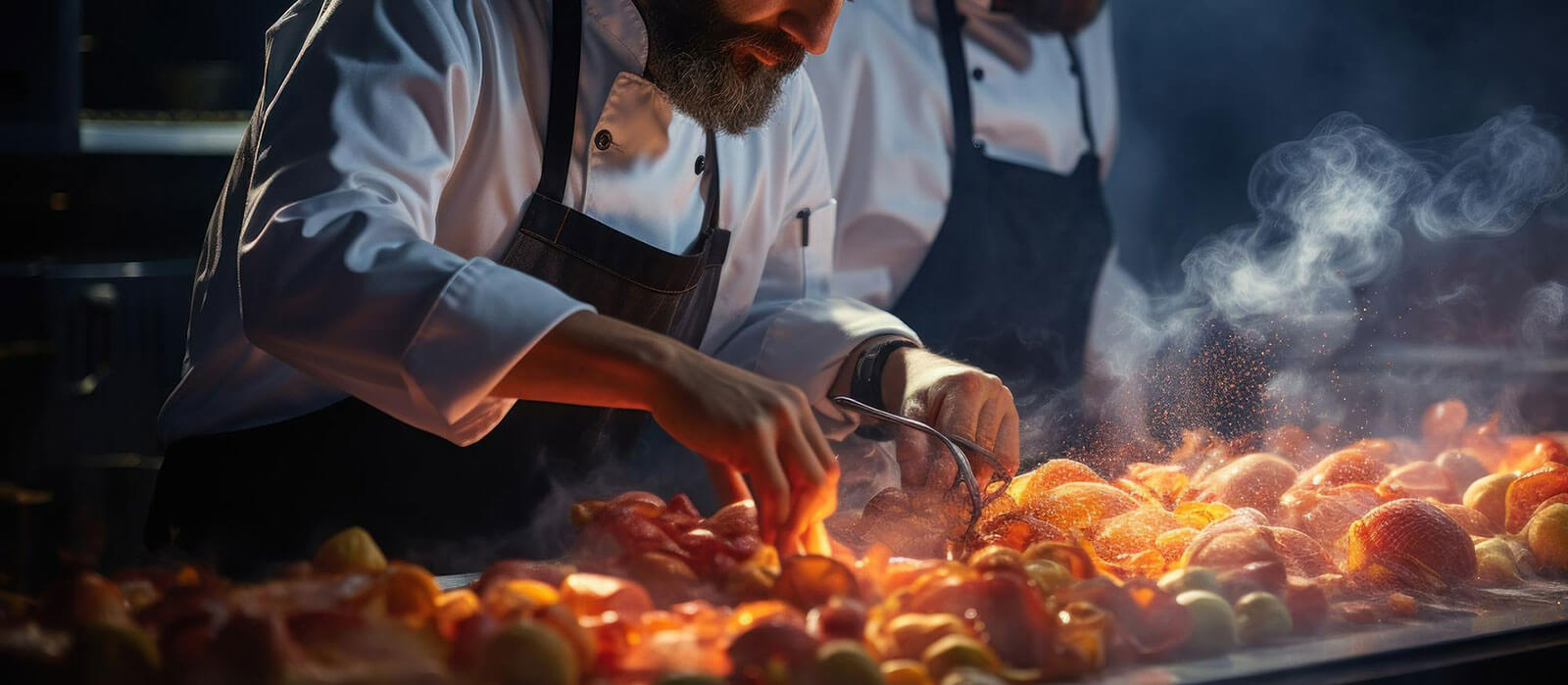
Photo by ROMAN ODINTSOV on Pexels · This image is for illustrative purposes only and may not depict the dish exactly as described.
Tomatoes roasted until they look almost ruined are tomatoes that have finally become themselves. The same is true of a grilled cheese pressed harder and longer than you think is wise.
— James Thomas, on the virtue of committed heat
Ingredients
The Roasted Tomato Base
1.4 kg Roma tomatoes, halved lengthwise (approximately 10-12 medium)
1 head garlic, top quarter sliced off to expose cloves
4 tablespoons extra-virgin olive oil, divided
1.5 teaspoons Diamond Crystal kosher salt, for roasting
0.5 teaspoon freshly ground black pepper
1 teaspoon caster sugar
6 sprigs fresh thyme
The Soup
3 medium shallots, finely sliced
2 tablespoons unsalted butter
60 ml dry sherry (Fino or Manzanilla — not cooking sherry)
500 ml good chicken stock (Heston Blumenthal’s roast chicken stock is the standard; a quality store-bought low-sodium stock is an acceptable concession)
1 tablespoon tomato paste, double-concentrated
0.5 teaspoon smoked sweet paprika
80 ml crème fraîche, full-fat, plus extra to finish
1 teaspoon Diamond Crystal kosher salt, to taste
1 pinch cayenne pepper
The Grilled Cheese
8 slices Pepperidge Farm Farmhouse Hearty White pullman loaf, cut 1.5 cm thick (or a comparable tight-crumbed white sandwich loaf — sourdough is for a different sandwich)
140 g Gruyère, coarsely grated
140 g Cabot Seriously Sharp white cheddar, coarsely grated
1 tablespoon Dijon mustard (Maille)
60 g unsalted European-style butter (Plugrà or Kerrygold), softened to room temperature
0.25 teaspoon flaky sea salt (Maldon) for finishing
Method
01Roast the Tomatoes Properly
Preheat your oven to 220°C (425°F) with a rack in the upper-middle position. Line a heavy rimmed baking sheet with parchment. Arrange the tomato halves cut-side up in a single layer — crowding is a critical failure here; use two sheets before you use one crowded sheet, or the tomatoes will steam rather than roast and you will end up with something pale and watery and sad. Nestle the garlic head in one corner. Drizzle 3 tablespoons of olive oil across everything, then scatter the salt, pepper, and sugar. Lay the thyme sprigs across the top. Roast for 45 to 50 minutes. You are looking for deep caramelization at the cut edges — amber verging on brick, with some visible charring on the outermost skins. The tomatoes should have collapsed into themselves, their flesh jammy and concentrated, smelling of something closer to sun-dried fruit than fresh vegetable. Remove and allow to cool for 10 minutes before handling. Squeeze the roasted garlic cloves free from their skins. Discard the thyme stems.
02Build the Soffritto Base
While the tomatoes roast, melt the butter with the remaining tablespoon of olive oil in a heavy-bottomed saucepan or Dutch oven over medium-low heat. Add the shallots with a pinch of salt and cook, stirring occasionally, for 12 to 15 minutes. They should turn translucent, then faintly golden, then soften further into something almost translucent again — this is full, slow softening, not a quick sweat. The smell shifts from sharp and raw to sweet and faintly nutty. Do not rush this with higher heat; browned shallots are acceptable at the very edges but a pan of scorched alliums will communicate bitterness through every bowl. Add the tomato paste and paprika, stir to coat, and cook for 2 minutes until the paste has darkened one shade and smells faintly of roasting. Pour in the sherry. It will hiss dramatically. Stir and scrape for 1 minute, cooking off the alcohol until the sharp fumes dissipate and what remains smells nutty and faintly floral.
03Blend, Season, Finish
Add the roasted tomatoes, their accumulated juices, and the squeezed roasted garlic to the pot. Pour in the chicken stock. Bring to a gentle simmer over medium heat and cook, uncovered, for 15 minutes, allowing the flavors to consolidate. Transfer in batches to a high-powered blender — a Vitamix or Blendtec, not an immersion blender, which will leave the texture rougher than is acceptable for this preparation. (If you insist on using an immersion blender, blend for a full 3 minutes and then pass through a fine-mesh sieve; you have my sympathy.) Blend on high for 90 full seconds per batch until the soup is deeply smooth, a vivid red-orange with a slight sheen. Return to the pot over low heat. Stir in the crème fraîche and the cayenne. Taste deliberately. You are adjusting for salt, acid, and heat — the soup should land bright from the tomato, rich from the fat, and gently warm at the back of the throat. If it reads flat, a small squeeze of lemon juice (not listed, but kept on the counter) will correct it immediately.
04Construct the Sandwich
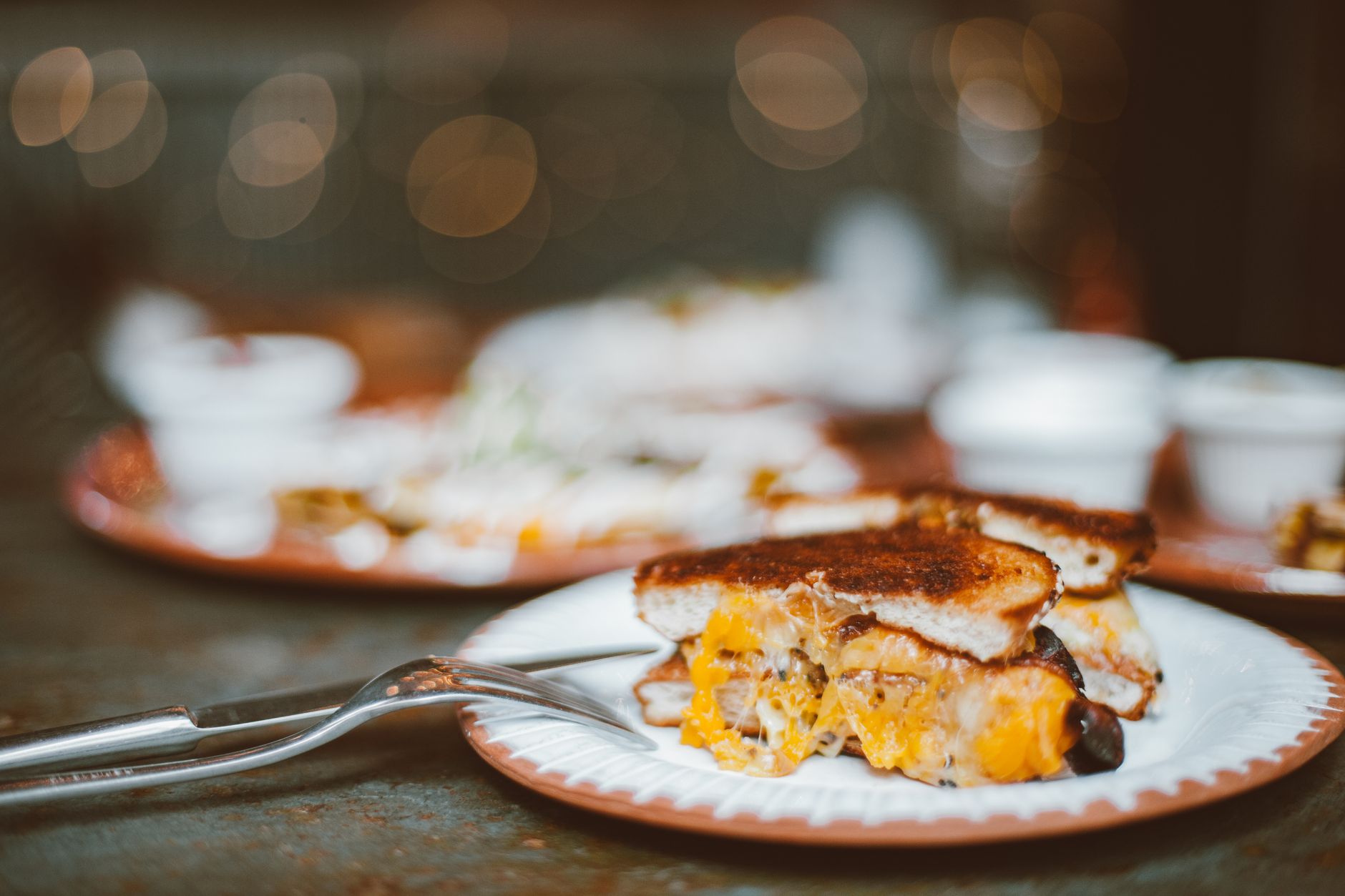
Combine the grated Gruyère and cheddar in a bowl. These two cheeses are not interchangeable with a single variety — Gruyère contributes the complex, slightly nutty melt; the sharp cheddar contributes the salty, assertive edge. Either alone produces something lesser. Lay the bread slices flat. Spread a thin, even layer of Dijon on the interior faces of all eight slices — this is not a Dijon sandwich, so restrain yourself to a bare coat. Divide the cheese mixture evenly across four of the slices, mounding it slightly in the center. Press the matching top slices on firmly. Spread the softened butter across both exterior faces of each sandwich, covering edge to edge and into the corners. Unbuttered corners produce pale, dry corners, which are an aesthetic failure in a dish where presentation is the first argument.
05Press, Brown, Serve
Heat a large cast iron skillet over medium-low heat for 3 full minutes before anything goes in. The pan is ready when a small piece of butter dropped in foams steadily but does not immediately brown. Place two sandwiches in the pan and set a second heavy pan directly on top, weighted with something dense — a full kettle, a heavy can, another cast iron pan. Press down firmly. Cook for 4 to 5 minutes without moving. The bread should be turning deep golden-amber with small darker patches; listen for a steady, low sizzle that indicates even contact. The critical failure mode at this stage is heat that is too high — the bread will brown before the cheese has fully melted, leaving you with a warm exterior and a cold, waxy interior. Flip carefully, return the weight, and cook a further 3 to 4 minutes. Remove and allow to rest on a wire rack for 90 seconds before cutting — this allows the cheese to set slightly so it pulls rather than pours. Cut on a sharp diagonal. Finish with a pinch of Maldon. Ladle the soup into warmed bowls, add a small swirl of crème fraîche, and serve both immediately. (The soup does not wait for a slow photographer.)
Variations
Charred Pepper Edition
Replace 400g of the Roma tomatoes with 3 large red bell peppers, roasted whole directly over a gas flame until fully blackened, then steamed in a covered bowl for 10 minutes, peeled, and seeded. Add 0.5 teaspoon of ground cumin to the soffritto with the paprika. Swap the smoked sweet paprika for hot smoked paprika.
The pepper extends the soup’s sweetness into something more complex and slightly smoky, with a heat that builds rather than arrives. The cumin adds a dry, earthy undertone that works directly against the richness of the crème fraîche. This is the version for a dinner table where the tomato soup and grilled cheese concept requires a slight defense.
The Miso Umami Build
Whisk 2 tablespoons of white shiro miso into the soup in the final minute of simmering, after the crème fraîche, off the heat. Do not boil after adding. For the sandwich, replace half the Gruyère with young Comté and add a thin smear of white miso to the interior bread faces alongside the Dijon.
Miso’s glutamates amplify the tomato’s natural savory depth without announcing themselves — guests will not identify it, but they will finish the bowl and want to know what you did differently. The miso in the sandwich creates a deeply savory, faintly caramel crust at the buttered exterior. This is not fusion; it is understanding what fermented ingredients do to one another.
Anchovy and Fontina
Add 4 oil-packed anchovy fillets to the soffritto with the shallots, allowing them to dissolve completely over 2 minutes before the shallots go in. Replace the cheddar in the sandwich with 140g Val d’Aosta Fontina, thinly sliced rather than grated. Add 4 fresh basil leaves per sandwich interior.
The anchovies will not taste of fish; they will taste of depth and a savory pull that makes every spoonful of the roasted tomato soup seem more complete than it did before. Fontina melts at lower temperatures than cheddar, producing a more liquid, silky interior to the grilled cheese that contrasts effectively with the crisped crust. This is the variation for people who believe they do not like anchovies.
What this recipe produces is a correct version of a dish that has spent decades being misrepresented by convenience. The roasted tomato soup is genuinely complex — sweet and acidic in the right proportions, finished with fat that adds body without masking the tomato’s character. The grilled cheese holds its structure, delivers on texture at every layer, and does not deflate into grease on the plate. Together, tomato soup and grilled cheese executed at this level is not comfort food in the dismissive sense that phrase usually carries. It is a disciplined pairing that happens to be deeply satisfying to eat.
Make the soup through step three the day before if it serves you; the flavor improves overnight in the refrigerator and reheats without protest over low heat. The sandwiches are made to order, always. A grilled cheese assembled in advance is a different and inferior object entirely. Serve both at the right temperature, in the right sequence, without apology.
JT
Contributing Chef, The Chip Aficionado
James Thomas
Snack theorist, unreformed purist
James Thomas is a classically trained chef who decided, at some point, that the chip, the kernel, and the flavoured bite deserved the same rigour as haute cuisine. He has opinions. He expresses them. He does not apologise.








Leave a Reply